



The first permanent molars come in around age 6, way in the back, often before a child has the patience or the wrist control to brush those chewing surfaces well.
Those teeth have deep grooves. A toothbrush bristle does not always reach the bottom. Snack crackers and school lunch sit there. That is where most cavities in kids start, and it is the main reason we talk about dental sealants for kids once those molars are in.
A sealant is a thin, painted-on coating that fills those grooves, helping keep food and bacteria out.
At Beach House, we use a BPA-free material on the chewing surfaces of molars and premolars. Application takes just a few minutes, and when the tooth is healthy, there is no drill and no shot. Parents usually ask the same three questions: Does my child need dental sealants? Are they safe? And do they replace the work we’re already doing at the sink?
What a Sealant Is (and Is Not)
Think of the chewing surface of a 6-year molar as a tiny canyon. Brushing cleans the rims. The floor of the canyon stays sticky. A sealant flows into that canyon and hardens, so the surface is smoother and easier to keep clean. The American Dental Association publishes an overview of how sealants work and who they help.
It is not a filling. A filling repairs a hole that already exists. A sealant is for a tooth that is still intact. If Dr. Kristi Parker can see or feel decay in the groove, we stop talking about sealing and start talking about treating the cavity. That is the honest split.
It also does not replace fluoride, flossing, or the twice-a-year cleaning. Sealants cover the chewing pits. They do not cover the sides of the teeth, where food contacts the neighbor tooth. Kids in Missouri City and Sienna still need the rest of the prevention plan we already use: cleanings, exams, and home care. Our cavity prevention page walks through that mix.
When We Recommend Dental Sealants for Kids
We look at the tooth in the chair, not at a calendar. The usual moment is soon after a first permanent molar is fully in. That is often first grade, sometimes a little earlier or later. The second big window is the 12-year molars.
Baby molars can get sealants too, if the grooves are deep and the tooth still has years of work left. A baby molar that is loose or about to come out is not worth sealing. “Sealants on baby teeth” is a real search and a real exam question. The answer is: sometimes, on the keepers.
Kids who still miss the back teeth when they brush, kids with deep grooves you can see without a mirror, and kids who already had a cavity in a molar are the ones who benefit most. A child with naturally shallow grooves and excellent home care may not need one on every tooth. We will say so.
What the Visit Looks Like
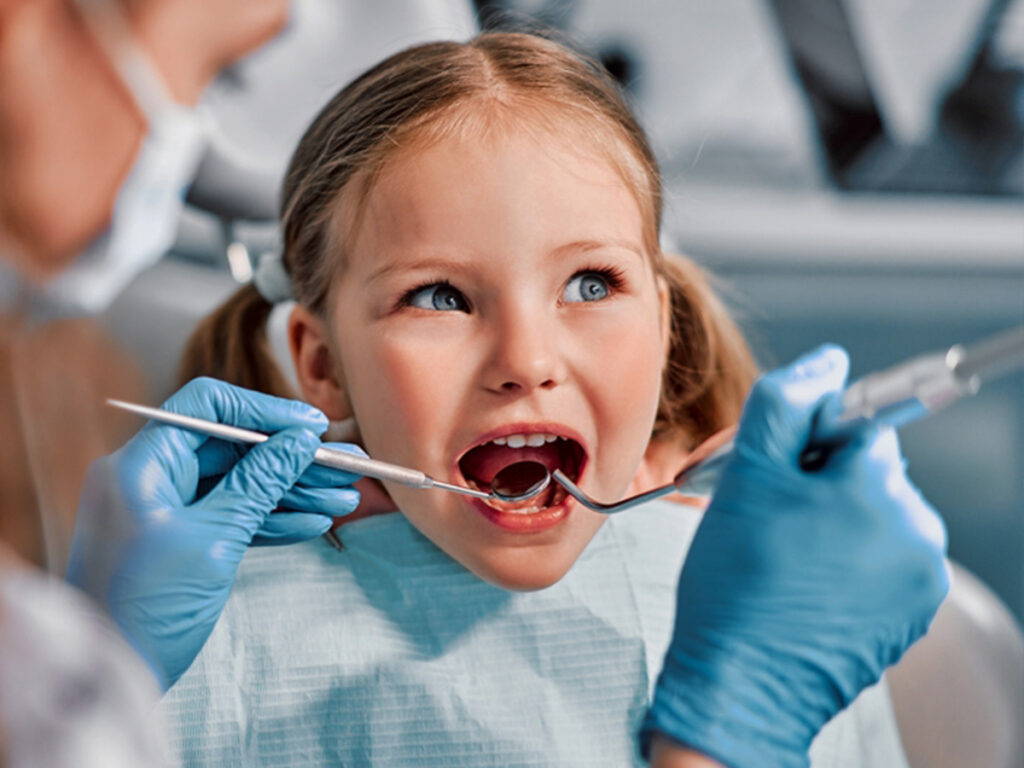
Your child stays in the room they already know, at 4417 Sienna Parkway, Suite 200. We isolate the tooth, clean the chewing surface, paint the material into the grooves, and set it with a light. Most kids are surprised it is over. Nothing is numb. Nothing is loud.
We check sealants again at regular cleanings. If a piece chips, we touch it up. They are not permanent armor. They are a coat that we maintain, the same way we watch fillings and baby-tooth spacers over time.
Pros and Cons
The upside of dental sealants for kids is simple. Most cavities in kids start in the chewing grooves of the 6-year molars. A sealed groove is harder to decay. The visit is short. If it prevents even one filling on a permanent molar, you have saved your child a longer appointment.
The limits are real. A sealant only protects the surface it covers. It can wear or chip. It does not fix a cavity that is already there. And it is not a reason to ease up on brushing after soccer practice or a night of Goldfish crackers in the carpool line.
Questions Parents Ask Us
Are dental sealants safe?
Parents ask if dental sealants for kids are safe. Yes, when they go on a healthy tooth. We paint a BPA-free material into the grooves and set it with a light. No drill. No shot. If your child has a rare material sensitivity, tell us before we start.
Do they work if my child already brushes?
Brushing still matters. The sealant is for the spot a 6-year-old’s toothbrush keeps missing: the floor of those back grooves.
How long do they last?
Years, if we check them at recare. They can wear or chip. They are a coat we maintain, not armor we forget about.
What if one chips or comes off?
We put it back on if the tooth is still a good candidate. If decay showed up underneath, we treat that instead of resealing over a problem.
Can baby teeth get sealants?
Permanent 6-year and 12-year molars first. Those are the keepers with the deepest grooves. Selected baby molars only when they still have a long job ahead. A loose baby molar is not worth sealing.
Do they replace fluoride or cleanings?
No. A sealant covers the chewing pits only. It does not cover the sides of the teeth, and it does not replace fluoride, flossing, or the twice-a-year cleaning.
Missouri City, Sienna, and the School-Year Timing
Fall is when we see the new 6-year molars clearly. Kids in Fort Bend are back in a cafeteria. The tooth is finally all the way in. If you have been waiting for the right time, a cleaning visit this month is a good one to ask.
We see families from Missouri City, Sienna, Sugar Land, and Pearland. Same office, same doctors: Dr. Kristi Parker, Dr. Shadow Asagari, and Dr. Sana Nasir. If you already know the beach-themed rooms, this is a small add-on to a visit you already make, not a special trip.
When a Sealant Is the Wrong Call
We will say no when:
- There is already decay in the groove
- The tooth is still erupting and we cannot keep it dry
- It is a baby molar about to come out
- A parent is hoping the sealant will stand in for brushing
We would rather tell you no and keep the tooth honest than sell a coat that cannot do the job.
If a cavity is already there, the next conversation is a filling, not a sealant. We wrote separately about fillings for very young kids. That post is for a different problem. Do not use this article as a reason to delay treatment on a tooth that already hurts or already has a hole.
How This Fits the Rest of Prevention
Sealants are one tool. Cleanings, fluoride where it is appropriate, and the boring daily stuff still do most of the work.
If you want the longer habit list, start with eight simple habits of cavity-free kids. If you already know you want the service write-up, the protective dental sealants page is the short version. This article is the parent version: what it is, who it is for, and when we will talk you out of it.

Book a Visit to Check Those 6-Year Molars
Ready to have us look at those 6-year molars and whether dental sealants for kids make sense? Book a visit. Bring the questions. We will look at the actual teeth before we recommend anything.